Business to Business E Commerce Examples: 7 Platforms
Explore business to business e commerce examples from Amazon Business, Grainger, Digi-Key and more, with tactics and lessons growth teams can reuse.
Published on 14 min read
Table of contents
- 1. Amazon Business
- 2. Alibaba.com
- What CRO teams can adapt
- 3. Grainger
- The CRO lesson
- 4. MSC Industrial Supply
- Where the model gets harder
- 5. Fastenal
- Build the digital layer around the real handoff
- 6. Digi-Key
- The lesson for growth teams
- 7. Uline
- Make reliability visible
- Top 7 B2B E‑Commerce Providers Comparison
- Turning These Patterns Into Your Next Test
A buyer who orders books at home expects the same ease at work. The difference is that a business order may still need approval routing, tax-exempt pricing, account-specific terms, delivery coordination, and an invoice that finance can reconcile at month-end. A fast consumer checkout doesn't solve those requirements by itself.
The best business to business e commerce examples connect a simple buying experience with the controls behind it. Some reduce procurement friction. Others turn supplier discovery into a structured sourcing process, connect digital orders to physical inventory, or make technical product selection easier for engineers. The seven platforms below use different mechanisms, and each offers a pattern that growth and CRO teams can adapt to their own storefront. For a broader framework, see these B2B ecommerce tactics.
1. Amazon Business
Amazon Business brings a familiar retail-style interface into a procurement setting. That combination matters because employees already understand how to search, compare, and reorder on Amazon, while procurement teams still need multi-user accounts, approval workflows, spend controls, tax-exempt purchasing, and reporting.
The growth mechanism is reduced adoption friction. A buyer doesn't need to learn an unfamiliar catalog or ordering pattern before making a routine purchase. Administrators can add governance around that behavior, then connect the marketplace to existing purchasing systems through PunchOut, punch-in, e-invoicing, and APIs. Business-only pricing, business selection, and account analytics add another layer of control.
Practical rule: Keep the first purchase familiar, but make the account logic strong enough to support the second, third, and hundredth order.
The platform's supplier breadth can also reduce off-catalog buying. Employees can find products that might otherwise require manual sourcing, while procurement teams gain visibility into purchasing activity. The trade-off is that marketplace convenience doesn't remove the need to evaluate total cost. Seller fees, shipping, and other landed-cost variables can differ by vendor, so finance teams may still need vendor-level analysis.
Amazon Business also separates its membership from consumer Prime, and the benefits aren't identical. That distinction should be visible in any internal business case.
For your own storefront, borrow the separation between shopper simplicity and administrator control. Let casual buyers search and reorder quickly. Give account owners the tools to define who can buy, which orders need approval, and how spend is reviewed. Those controls should support conversion, not appear as obstacles before the buyer understands the product.
For inspiration on post-purchase proof and marketplace content, review this guide to creating UGC that sells on Amazon.
2. Alibaba.com
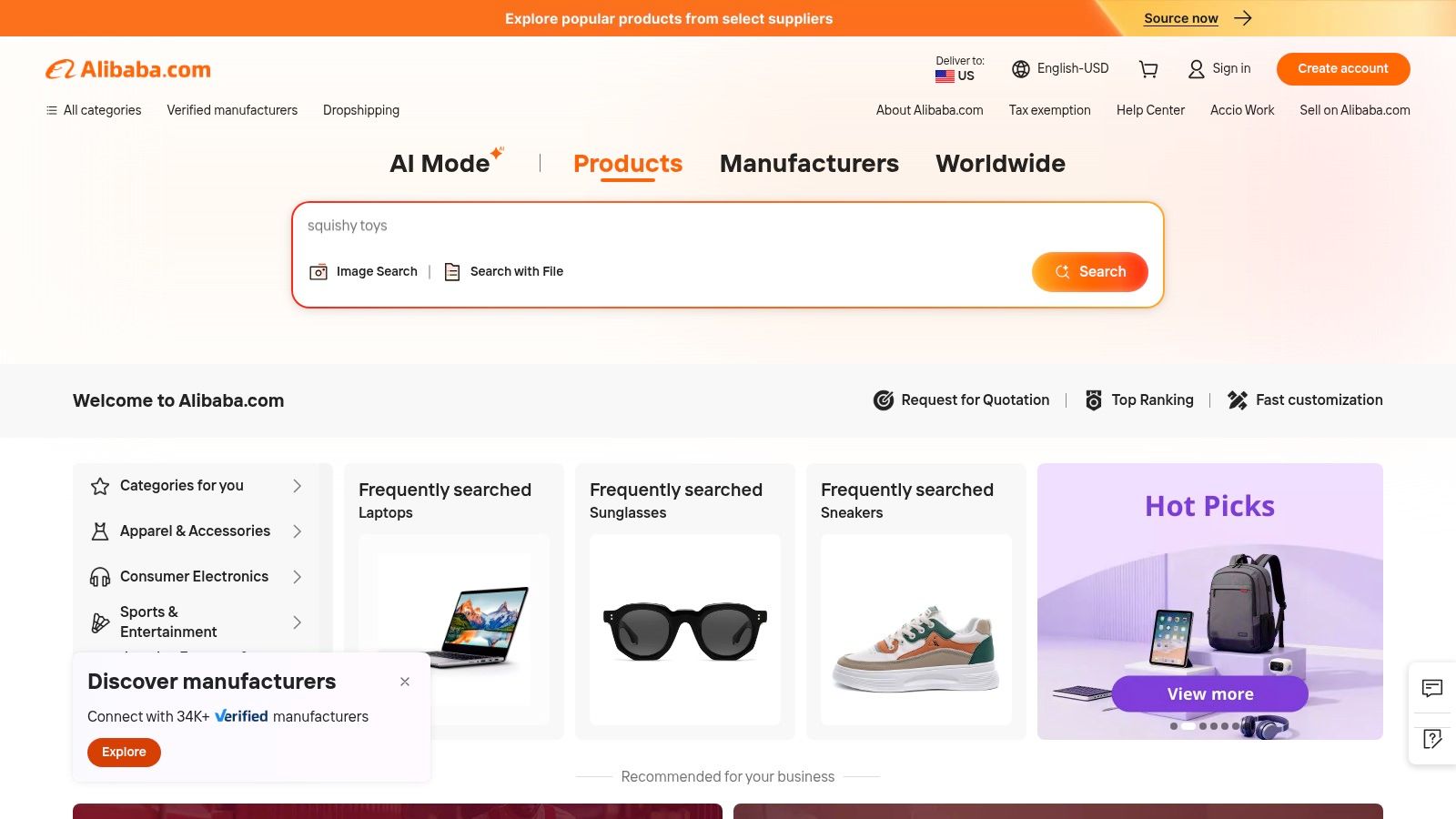
Alibaba.com solves a different B2B problem. It helps companies discover manufacturers and trading companies when the required product may need custom specifications, private labeling, packaging changes, or a minimum order quantity. The platform is less about a single fast reorder and more about turning fragmented international sourcing into a searchable, transaction-enabled workflow.
Its core mechanism is structured supplier discovery. Buyers can compare supplier profiles, review badges and certifications, submit requests for quotation, and negotiate around product requirements. Eligible transactions can use Trade Assurance, with payment and dispute processes handled through Alibaba.com. The protection only applies when buyers use the platform's prescribed workflows, so moving the transaction off-platform can weaken the safeguards.
The model has clear trade-offs. A large supplier base can create pricing power and manufacturing choice, but the buyer must do more qualification work. Product prices are supplier-set and often depend on order quantities, specifications, shipping arrangements, and negotiation. A polished listing doesn't replace sample review, quality checks, or a clear definition of acceptance criteria.
What CRO teams can adapt
The useful lesson isn't to copy a marketplace layout. It's to make complex buying intent legible. A buyer looking for a standard item needs a different path from a buyer who needs a custom quote. Your storefront can separate those paths with clear calls to action such as Buy standard stock, Request a quote, and Discuss custom production.
That distinction also improves lead quality. A quote form should ask for the information sales and operations need, such as quantity, technical requirements, delivery destination, and target timing. It shouldn't force every visitor through a generic contact form.
Account-specific experiences also matter. Personalization works best when it changes the message and next action for a real buying context, not when it adds decorative recommendations. See these website personalization examples for ways to think about that distinction.
3. Grainger
Grainger treats B2B ecommerce as part of an operating system for maintenance, repair, and facility supply. The storefront supports online account controls, user roles, approvals, shared lists, order history, and procurement integrations. The important point is that the purchase doesn't end at checkout. Inventory availability, replenishment, and decentralized buying all affect whether the organization can keep working.
Its PunchOut and ERP integrations can expose account-specific pricing and availability inside an organization's existing purchasing flow. That reduces the need for buyers to move between systems, copy product details, or ask procurement staff to recreate an order manually. The platform also connects with KeepStock programs, including vending, vendor-managed inventory, and customer-managed inventory.
The value is operational continuity. A plant manager may need a product immediately, while the procurement team needs policy enforcement and a record of the purchase. When those requirements live in one workflow, the buyer can act without bypassing governance.
The best B2B storefronts don't just sell products. They help the buyer avoid the operational event that product was meant to prevent.
The trade-off is account dependence. Contracted and list pricing can differ, and advanced inventory programs may require an agreement, negotiation, and disciplined adoption. A public storefront can demonstrate the experience, but the full commercial value often depends on the account configuration behind it.
The CRO lesson
Measure more than the checkout conversion rate. A serious conversion rate optimization program should examine search success, availability visibility, approval completion, repeat ordering, and the proportion of orders that still require human intervention.
Your own site can borrow Grainger's guided buying pattern without building vending machines. Show the right products for the account. Preserve shared lists. Make reorder history useful. Display stock and delivery information before the buyer commits. If a buyer has to call sales to confirm a basic operational detail, the page hasn't finished its job.
4. MSC Industrial Supply
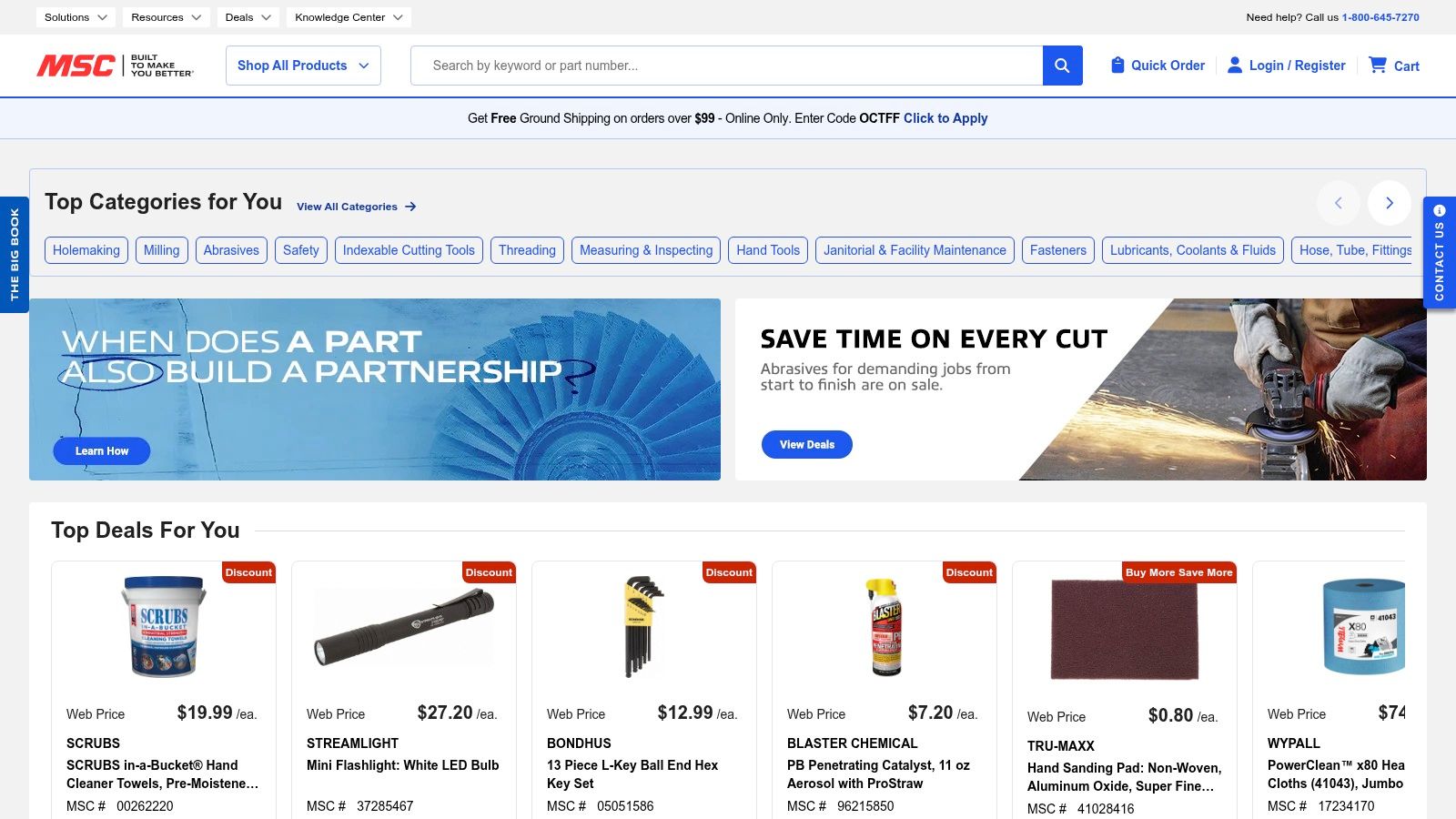
MSC Industrial Supply is built around a buyer who needs more than a product listing. Metalworking and MRO purchases can involve technical requirements, non-catalog items, approval rules, and plant-level inventory programs. MSC connects those needs through storefront administration, PunchOut and procure-to-pay integrations, quotes, sourcing workflows, and vending or vendor-managed inventory visibility.
The strongest mechanism is procurement functionality embedded in the buying path. A buyer can start with a product search, move into a quote or sourcing request when the item isn't standard, and still keep the activity connected to the company's purchasing system. That avoids the familiar swivel-chair problem, where someone finds an item in one system and manually rebuilds the transaction in another.
A broad catalog helps only when the buyer can identify the right item. Industrial shoppers often need specifications, compatibility information, and a way to distinguish a direct purchase from a sourcing conversation. The storefront should make those choices explicit.
Where the model gets harder
The advanced experience usually depends on account setup. Vending and vendor-managed inventory connections may require commercial commitments, minimums, or site-specific implementation. PunchOut and enterprise functions can also depend on negotiated agreements, so a public visitor won't necessarily see the same workflow as an established customer.
That creates a useful design principle. Separate what a new visitor can understand from what an authenticated account can do. A public page should explain the use case and show enough product detail to build confidence. An account page should expose negotiated pricing, approval status, reorder tools, and inventory signals.
Don't hide the next step behind a generic “Contact us” button. Name the path: request a quote, check account pricing, source a non-catalog item, or reorder a previous purchase.
The CRO opportunity is to reduce ambiguity at the point where standard ecommerce stops. Track whether buyers can find a valid substitute, submit a complete quote request, and return to the same sourcing context later. Those signals often tell you more than a single completed transaction.
5. Fastenal
Fastenal connects digital procurement with physical access to industrial supplies. Its model includes industrial vending, locker pickup, onsite programs, vendor-managed inventory, PunchOut catalogs, EDI, custom catalogs, and negotiated pricing. The buyer may order through a digital system, collect from a secure location, or receive replenishment based on point-of-use signals.
That combination changes the conversion question. The buyer isn't only asking, “Can I buy this?” They're asking, “Will this be available where my team needs it, and can the organization trace the transaction?” Vending and onsite programs connect the answer to a specific facility, work area, or inventory process.
The model is particularly relevant for operations teams that care about availability and controlled consumption. A locker can provide secure pickup. A vending machine can make the product accessible at the point of use. Replenishment signals can connect physical usage back to procurement.
The trade-off is implementation effort. Onsite services and vending programs may require site readiness, agreements, or spend commitments. A simple product page can't deliver those benefits without the operational setup behind it.
Build the digital layer around the real handoff
Most B2B sites treat delivery as a final status message. Fastenal's pattern suggests a broader approach. Show the handoff that matters to the buyer, whether that's locker pickup, branch collection, onsite availability, or scheduled replenishment.
For a smaller storefront, the adaptation may be simple. Let account users select a delivery location, save a preferred site, and see whether stock is available there. Make pickup instructions and authorization rules visible before checkout. If the order will be collected by another employee, show what information that person needs.
This also creates useful segmentation. A first-time visitor may need product education. A returning account may need a reorder button and site-specific availability. A mobile user standing on a facility floor may need a short path to scan, select, and collect.
The strongest experience doesn't force every buyer into the same journey. It reflects the physical context that determines whether the order succeeds.
6. Digi-Key
Digi-Key serves a technical buyer who often starts with a design problem rather than a shopping list. Engineers need parametric search, component availability, alternatives, bill-of-materials support, and a reliable way to move from design selection into procurement. The platform's growth mechanism is to support that workflow before the purchase is fully defined.
Its BOM Manager and myLists help teams organize components, collaborate on sourcing, and manage revisions. Real-time stock visibility supports decisions that might otherwise require several supplier checks. An API suite for search, pricing, availability, and ordering can connect the distributor to ERP, MRP, or product lifecycle systems.
That developer-friendly layer matters because the best conversion may not happen on the distributor's product page. It may happen inside an engineering tool, a procurement dashboard, or an automated reorder process. Digi-Key makes the catalog available to systems that buyers already use.
A catalog this deep still creates risk. Distributor pricing can move with component availability, while minimum order requirements and changing costs can force engineers to rationalize a BOM. Search must therefore do more than return a product name. It should help the buyer compare technical parameters, identify alternates, and understand whether the selected component can support the intended build.
The lesson for growth teams
Treat high-intent content as part of the buying system. A useful search engine marketing strategy should connect landing pages to the questions that precede a purchase, such as compatibility, specifications, alternatives, and availability.
You can borrow Digi-Key's workflow without offering an API. Let buyers save product groups, export a list, share a selection with colleagues, and return to a previous configuration. If your products have technical attributes, expose them in structured filters instead of burying them in prose.
For technical buyers, better discovery is often a stronger conversion lever than a louder call to action.
Measure whether visitors find a valid product, compare alternatives, save a list, request a quote, or return with a repeat order. Those actions show that your storefront is helping buyers make a defensible decision.
7. Uline
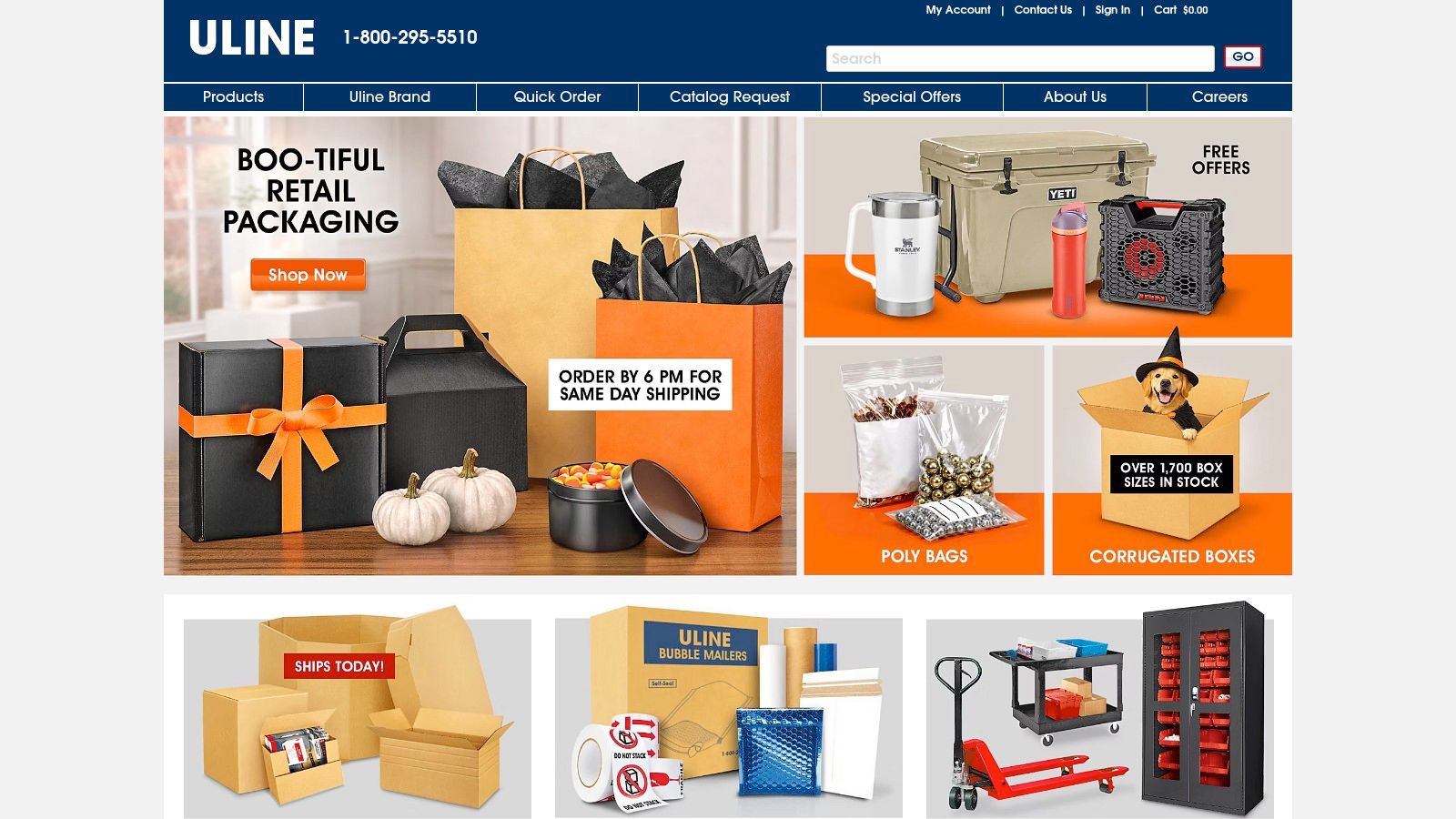
Uline focuses on a different form of B2B value, predictable fulfillment for packaging, warehouse, and facility supplies. Its ordering experience is straightforward, while its operating promise centers on shipping deadlines, broad consumables availability, freight information, and business payment workflows.
For qualified customers, Net 30 credit and an “Invoice Me” option can fit existing finance processes. The platform also provides detailed freight and handling information, which matters because a product price without delivery cost can mislead an operational buyer. Orders placed before the relevant local branch cutoff can qualify for same-day shipping from that branch, subject to the company's stated conditions.
That clarity is a retention mechanism. A warehouse buyer often doesn't want a discovery experience. They want the right carton, label, or storage product to arrive when the operation expects it. A clear ordering path and reliable fulfillment information can be more valuable than personalization.
The trade-off is that freight and handling are generally added to the invoice, alongside taxes where applicable. Payment options are limited compared with consumer ecommerce, and freight may still be billed separately or collected depending on the account arrangement. Buyers need to understand the full commercial terms before they place an order.
Make reliability visible
The lesson is to put operational certainty near the decision point. Show the delivery window, branch or fulfillment condition, freight treatment, invoice option, and any account qualification before the buyer has to ask. Don't make customers open several policy pages to discover what will happen after checkout.
That same pattern works for manufacturers and distributors. A product page can include reorder information, pack size, shipment conditions, and account payment terms alongside the primary CTA. Returning buyers should see a fast route to the same SKU, while new buyers can still compare specifications and fit.
A reliable B2B journey doesn't need to imitate a consumer marketplace. It needs to remove the questions that delay a routine purchase.
Top 7 B2B E‑Commerce Providers Comparison
| Platform | Implementation complexity (🔄) | Resource requirements (⚡) | Expected outcomes (📊) | Ideal use cases (💡) | Key advantages (⭐) |
|---|---|---|---|---|---|
| Amazon Business | Moderate 🔄, account setup; optional PunchOut/APIs | Low–Medium ⚡, minimal for basic use; IT for integrations | Improved procurement control + broad selection 📊 ⭐⭐⭐⭐ | Decentralized teams wanting consumer UX with policy controls 💡 | Familiar UX, large supplier base, strong integrations ⭐⭐⭐⭐ |
| Alibaba.com | Low–Medium 🔄, platform-native sourcing; supplier vetting required | Low–Medium ⚡, sourcing time, logistics for MOQs | Cost savings at scale; longer lead times possible 📊 ⭐⭐⭐ | Private-label sourcing, high-volume MOQ purchases 💡 | Global manufacturers, Trade Assurance, RFQ tooling ⭐⭐⭐ |
| Grainger | Medium–High 🔄, account agreements, PunchOut, inventory programs | Medium–High ⚡, integration and program setup | Reduced stockouts, improved compliance/uptime 📊 ⭐⭐⭐⭐ | MRO/facilities needing governed buying and inventory programs 💡 | Enterprise governance, KeepStock/VMI, guided buying ⭐⭐⭐⭐ |
| MSC Industrial Supply | Medium 🔄, PunchOut, quoting, account setup | Medium ⚡, setup for advanced vending/VMI integrations | Streamlined shop-floor procurement and approvals 📊 ⭐⭐⭐ | Plants/shops requiring shop-floor to e-procurement flows 💡 | Embedded procurement features, broad ERP experience ⭐⭐⭐ |
| Fastenal | Medium–High 🔄, onsite programs, vending/locker integration | Medium–High ⚡, site readiness, program commitments | Lower carrying costs; point-of-use control improved 📊 ⭐⭐⭐⭐ | Operations needing onsite vending, locker pickup, managed inventory 💡 | Physical-digital integration, flexible pickup options ⭐⭐⭐⭐ |
| Digi-Key | Low–Medium 🔄, API integration and developer tools | Low–Medium ⚡, engineering/automation effort | Faster prototyping and automated BOM-driven procurement 📊 ⭐⭐⭐⭐ | Hardware teams needing parametric search and BOM tools 💡 | Developer APIs, BOM manager, real-time stock visibility ⭐⭐⭐⭐ |
| Uline | Low 🔄, straightforward online ordering and credit setup | Low ⚡, simple workflows; Net 30 for qualified buyers | Predictable, fast fulfillment for consumables 📊 ⭐⭐⭐ | Packaging/warehouse operations needing reliable same-day shipping 💡 | Predictable shipping windows, Net 30 credit option ⭐⭐⭐ |
Turning These Patterns Into Your Next Test
These platforms point to different growth levers. Amazon Business reduces adoption friction through a familiar interface and procurement controls. Alibaba.com structures supplier discovery and custom quoting. Grainger and MSC connect buying to governance and inventory. Fastenal joins digital ordering to physical availability. Digi-Key supports technical evaluation and automation. Uline makes fulfillment and payment expectations clear.
Start with the friction your buyers mention most often. If approvals delay orders, test account roles, saved carts, and visible approval status. If buyers hesitate because pricing varies by account, show how authenticated pricing works and provide a clear route to request access. If repeat purchases consume time, prioritize reorder lists, saved configurations, and previous-order actions before adding recommendation features.
Run the first test on one segment. A first-time visitor from a search campaign needs proof and orientation. A returning account may need a direct reorder path. A procurement user may care about integration and approvals, while an engineer may care about specifications and alternates. Treating them as one audience will hide useful differences in behavior.
Data quality sets the limit for every front-end improvement. B2B practitioners identified system compatibility as a leading integration challenge at 67%, data consistency across tools at 63%, high implementation costs at 46%, and limited internal expertise at 43%, according to the 2025 State of B2B Ecommerce research. The same source reports that 64% of buyers expect negotiated customer-specific pricing to appear accurately online, while 52% want automated delivery tracking. Those expectations make stale pricing and inventory more than technical defects. They directly undermine the promise made by the landing page.
Buyer context matters just as much. A cross-market survey of 750 professional buyers across the United States, United Kingdom, Mexico, Germany, Australia, and the Netherlands found that 85% had experienced online-buying frustrations that led to abandoned purchases, while 75% were willing to switch suppliers for a smoother experience, as reported in research on frustrated B2B buyers. The same research says 97% considered a fast, simple, and accurate online experience essential, and 94% viewed omnichannel selling as at least as effective as previous sales models.
Use those findings as direction, not as a reason to rebuild everything. Pick one segment, one friction point, and one measurable behavior. Then test headline, subheading, CTA, account messaging, or reorder flow against the actual outcome you need, such as qualified pipeline, approved orders, repeat purchases, or revenue per account. Tools such as Polish can test headline, subheading, and CTA variants for each visitor segment, so you can see which version converts before rolling it out more widely.
Polish writes and tests landing page versions for each visitor, adapting the headline, subheading, and CTA to signals such as campaign, device, country, and returning status. Apply that approach to the buyer friction you identified, and visit Polish to start testing a more relevant B2B experience.
- B2B e-commerce examples
- B2B procurement platforms
- B2B growth tactics
- B2B marketplace strategy
- procurement e-commerce
Your website rewrites itself until it converts.
Polish writes new versions of your headlines and CTAs, tests them on your real visitors and keeps the ones that win.
Start free