One for One Marketing Explained: How the Model Works
One for One Marketing explained: how the model works, where it wins, its risks, and how to prove the giving claim.
Published on 11 min read
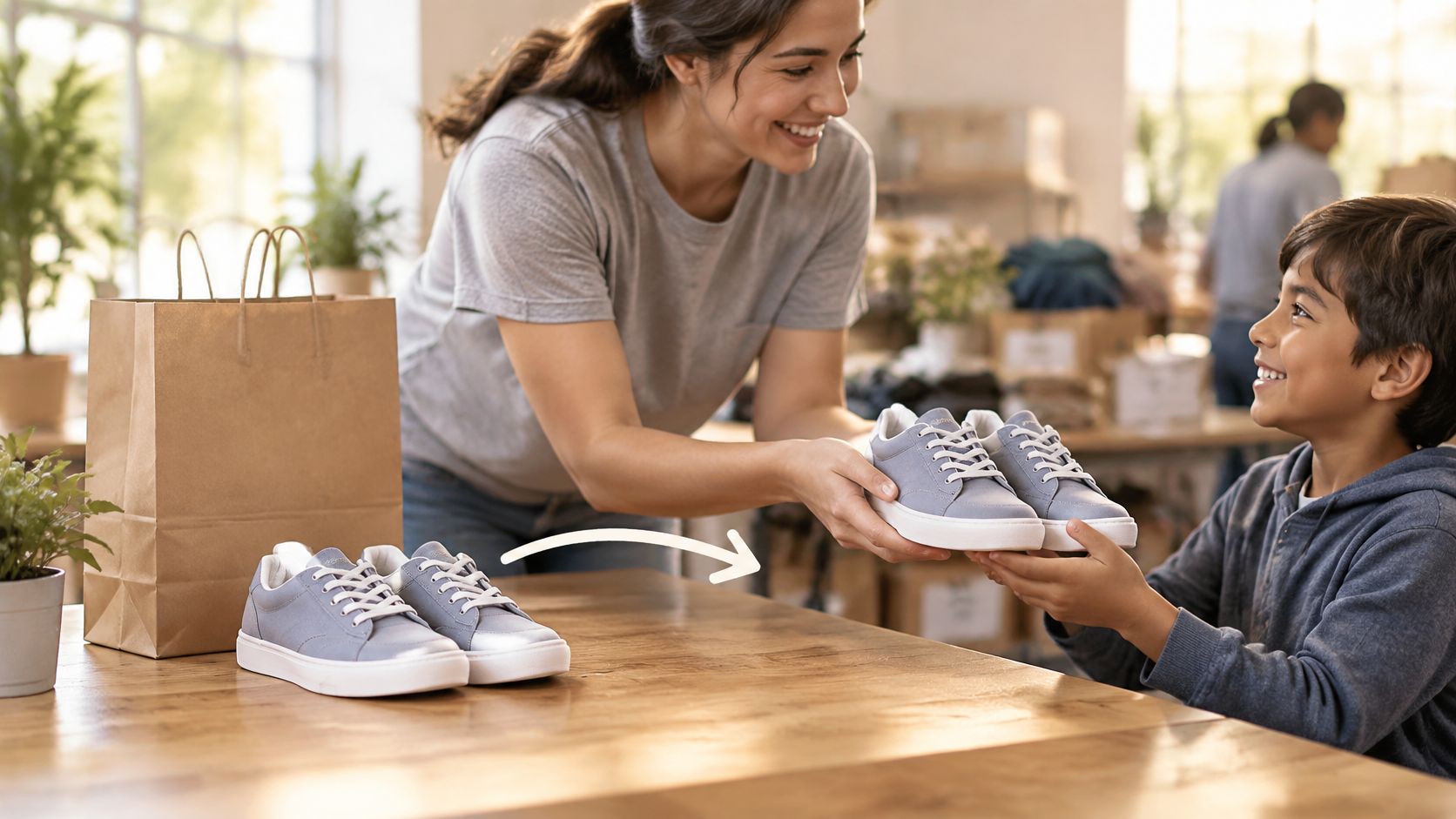
Table of contents
- What One-for-One Marketing Means
- The purchase includes the giving promise
- How a One-for-One Offer Works, Step by Step
- Check the commercial and communication details
- Brands That Use the Model and What They Give
- Similar products can require different delivery systems
- Why the Model Sells and When Cash Works Better
- Choose usefulness before vividness
- Costs, Limits and Sustainability Risks
- Calculate the full obligation
- Challenge the impact assumption
- How to Prove a One-for-One Claim
- Publish evidence that answers specific questions
- Separate evidence from persuasion
- Decide Whether One-for-One Fits Your Brand
- Run a controlled message test
You're reviewing a product page, and beside the price is a promise: buy a pair, and someone in need gets a pair. It sounds simple, but before putting that offer on your own page, you need to know what you're promising and how you'll prove it happened.
What One-for-One Marketing Means
One-for-one marketing means a brand promises to give a matching product to someone in need for every qualifying product a customer buys. The brand makes that promise part of the sales offer, usually in its advertising or on the product page.
The modern example began with TOMS. According to Entrepreneur's account of TOMS, founder Blake Mycoskie encountered children without shoes during a visit to Argentina, then established the company's shoe-matching model in 2006. For every pair purchased, TOMS would provide a pair to a child in need.
The purchase includes the giving promise
Say you're choosing between otherwise appealing pairs of shoes. With a one-for-one offer, you're evaluating the shoes and the promised donation together. You don't need to make a separate contribution or choose a donation amount.
That's the important difference from a standard charitable donation. When you give money directly, the charitable transaction stands on its own. In a one-for-one purchase, the company takes responsibility for fulfilling the donation triggered by your order.
Definition test: Can the brand explain what it gives, who receives it, and which purchase triggers the match?
The model later influenced brands such as Warby Parker and Bombas, which adapted the idea to other product categories. The memorable part isn't generosity alone. It's a relationship between a purchase and a tangible outcome that customers can explain to someone else.
Don't confuse one-for-one marketing with one-to-one marketing. The latter means tailoring communication to an individual customer. A business can personalize its advertising without donating anything, and it can run a matching program without personalizing its advertising.
How a One-for-One Offer Works, Step by Step
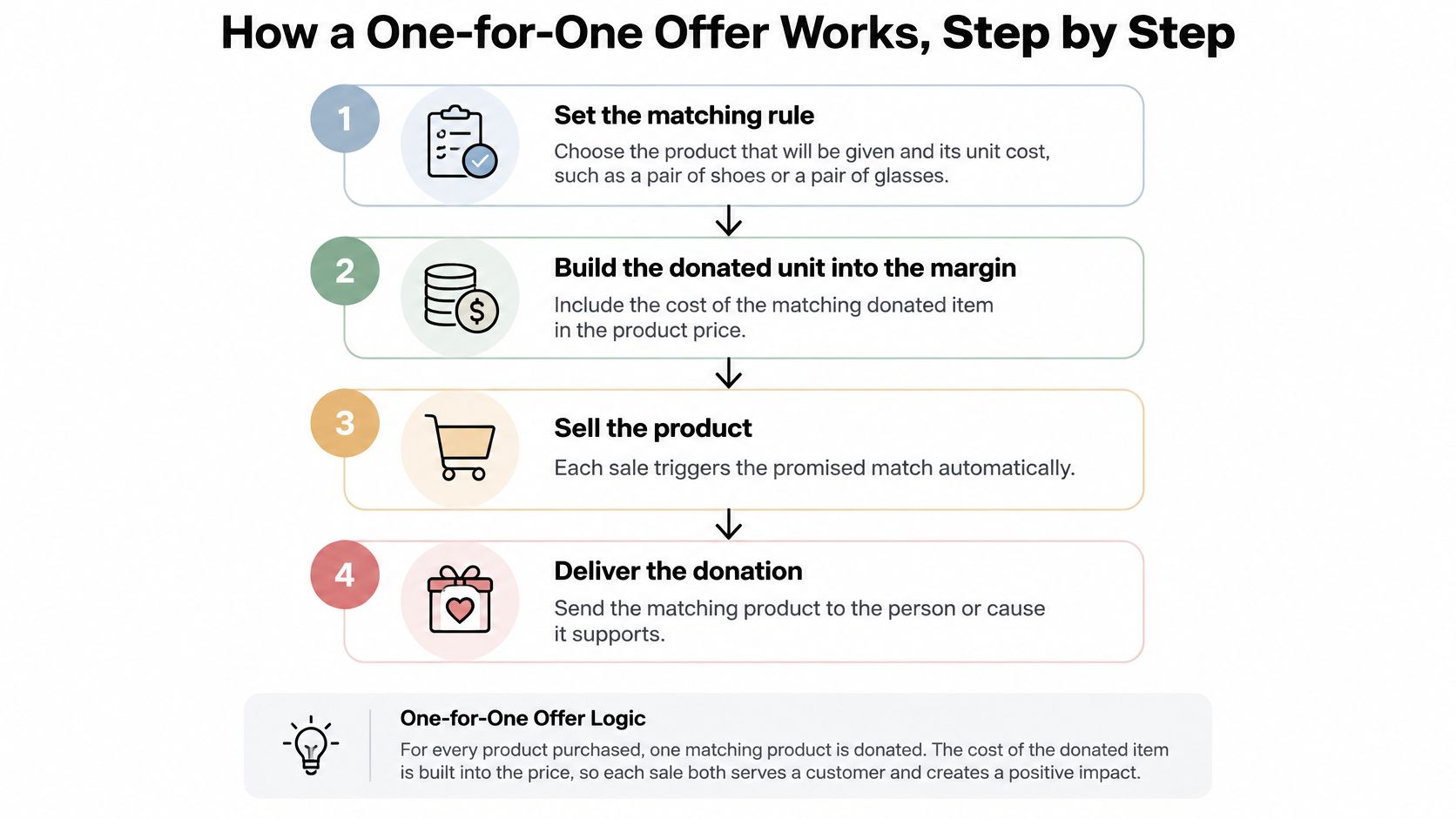
The customer sees a short promise. Behind it, your team needs a cost model, an order record, and a delivery process.
-
Set the matching rule. Specify the donated product, its usable specifications, and its unit cost with the receiving partner. The common mistake is choosing something convenient to manufacture rather than something recipients can use.
-
Build the donation into the margin. Budget for the donated item alongside packaging, transport, handling, and partner costs. Don't treat the factory price as the full cost of fulfilling the promise.
-
Show the promise before payment. Put the item, recipient group, partner, and qualifying-purchase rule on the product page and at checkout. Hiding exclusions in a separate policy leaves shoppers with an incomplete understanding.
-
Record each qualifying sale. Connect order records to donation obligations, with written rules for cancellations and returns. Counting every order without reconciling it can inflate your reported commitment.
-
Deliver through a capable partner. Agree on recipient eligibility, product requirements, and a delivery schedule before launch. Shipping stock to a warehouse isn't necessarily the same as getting it to recipients.
-
Report completed delivery. Reconcile promised, dispatched, and received units, then explain any outstanding balance. Publishing a total without defining its status makes it difficult to check.
Check the commercial and communication details
For marketplace sellers, Next Point Digital's guide to improve margins on marketplace orders offers context on bundling while you assess whether an offer can support its costs. Bundling doesn't remove the donation obligation, so calculate profitability after fulfillment.
Before testing copy, use these A/B testing examples to plan a comparison that changes a defined element rather than the entire shopping experience.
Your launch checklist should answer these questions:
- Ownership: Who reconciles sales against donations?
- Exceptions: What happens after a refund or stock shortage?
- Approval: Has the partner signed off on both the item and the public wording?
Brands That Use the Model and What They Give
A pair of shoes, a pair of glasses, and a pack of socks may all support a giving promise. Yet each meets a different need, and each requires a different route to the recipient. The useful comparison starts with what people receive and whether it suits them.
Notable one-for-one brands and what they give
| Brand | Product Sold | Item Given |
|---|---|---|
| TOMS | Shoes | Shoes to children in need under its original pledge |
| Warby Parker | Eyeglasses | Eyewear-related support through its adapted giving model |
| Bombas | Socks and basics | Donated clothing through its adapted giving model |
These examples connect a purchase to a recognizable product category. They do not establish that recipients receive an identical retail item or that the brands use the same distribution system. TOMS's original pledge also illustrates why a historical offer should be distinguished from a brand's current giving policy.
Similar products can require different delivery systems
Matching is a counting rule. It does not tell you whether the donated product is useful.
A shoe program needs appropriate sizes and a way to identify recipients. Eyewear can require assessment and fitting, so shipping frames alone may not meet the need. Clothing partners need items with specifications that suit the people they serve, rather than whatever stock a retailer wants to clear.
Consider a clothing retailer working with a local organization on a qualifying product line. The organization's requirements should shape the donated goods. The retailer can then decide which purchases can sustainably fund those goods and describe the match accurately.
Copy the clarity of the promise, not another brand's distribution assumptions.
The donated item need not share the retail product's color, packaging, or premium finish. Those differences should be explicit: a shopper should understand what is given without assuming it is the item pictured for sale.
Brand recognition is a starting point for questions, not proof of a particular giving claim. Before using an example in a campaign, check the brand's current policy for what it promises and how it describes delivery. A useful comparison names both the recipient's benefit and the evidence behind the promise.
Why the Model Sells and When Cash Works Better
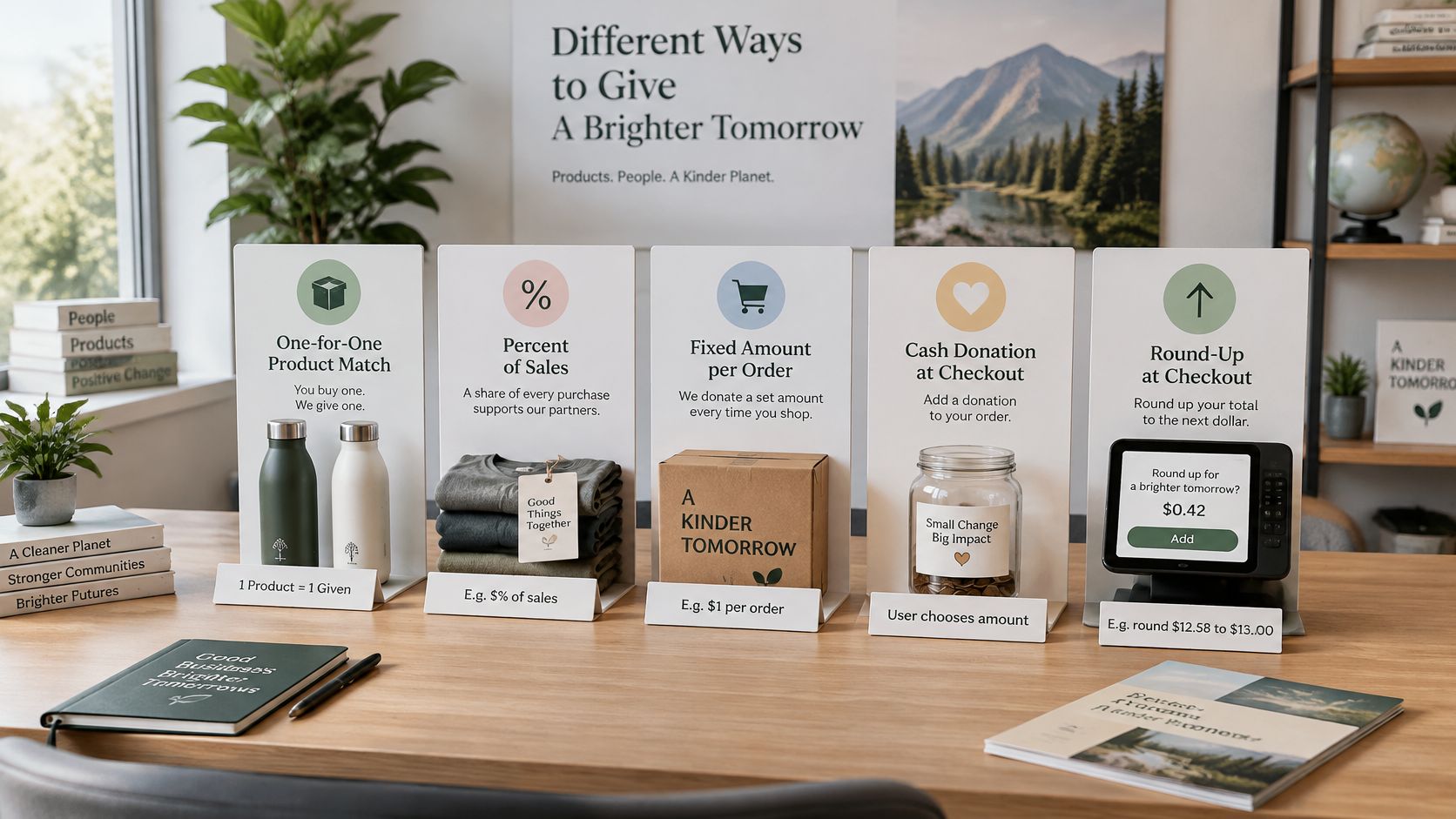
The main giving models differ in who supplies the donation and what triggers it.
Giving models compared
| Model | What the Shopper Gives | Donation Basis | Best Fit |
|---|---|---|---|
| One-for-one product match | Buys a product | Matching product unit | Simple, visible goods with a clear need |
| Percent of sales | Buys a product | Fixed share of revenue | Broad product ranges with sustainable margins |
| Fixed amount per order | Buys a product | Set cash amount per purchase | Services or products without a useful matching item |
| Cash donation at checkout | Gives money | Amount the shopper chooses | Shoppers who want control over their contribution |
| Round-up at checkout | Gives small change | Difference to the rounded-up total | Low-price, high-volume purchases |
A 2025 study published in the International Journal of Advertising found that one-for-one promotions can outperform cash-donation promotions because consumers can more vividly imagine the donated product and its use, particularly when they have limited experience using the product. That's a conditional finding, not a guarantee that matching will improve your conversion rate.
Choose usefulness before vividness
Say your company sells notebooks and a partner needs classroom supplies. A notebook donation may be easy to understand and appropriate. If the partner instead needs transport to help students attend school, matching notebooks would serve your advertising better than its actual work.
Cash is the better choice when the need isn't your product. It also deserves consideration when a partner can purchase suitable goods locally or needs flexibility as circumstances change.
Use a clear value proposition to explain the customer benefit without letting the charitable promise obscure what you sell. Then, as you choose marketing channels for your startup, consider where you have enough space to explain the giving mechanism accurately.
The matching mechanism earns its place when shoppers can picture an outcome that recipients need. A vivid but inappropriate donation isn't a stronger offer.
Costs, Limits and Sustainability Risks
TOMS demonstrates why a memorable promise shouldn't become an untouchable business rule. A company can distribute substantial quantities of products and still decide that a different giving structure better supports its future work.
According to RetailWire's discussion of TOMS' changing model, public accounts reported nearly 100 million pairs donated across more than 85 countries by 2020, and the company ended its universal shoe-for-shoe pledge in 2021, moving toward directing one-third of annual profits to community-focused organizations. The scale and the subsequent change belong in the same assessment.
Calculate the full obligation
A retail price above manufacturing cost doesn't tell you whether matching is affordable. Your team must also pay for the purchased product's fulfillment, customer acquisition, returns, staff, and overhead.
Build a contribution-margin worksheet for the qualifying sale. Include the donation's production or purchase cost, freight, storage, distribution, and reporting. Test discounted orders as well as full-price orders, because an offer that works only before promotions may become difficult to maintain.
Watch the difference between cash timing and profitability. Even a commercially viable program can create pressure if you must pay for donation inventory before customer revenue arrives or before a distribution partner can accept stock.
Challenge the impact assumption
Ask your partner to assess the risks the matching headline leaves out:
- Local suitability: Are the sizes, materials, and product specifications appropriate for recipients?
- Market effects: Could free imported goods undermine local sellers or producers?
- Delivery capacity: Can the partner store, distribute, and support the product without diverting resources from more urgent work?
- Lasting value: Will recipients be able to use, maintain, or replace the item where necessary?
These are due-diligence questions, not reasons to assume every product donation causes harm. They help you distinguish an appealing campaign from a suitable intervention.
Operational warning: Counting goods delivered measures activity. It doesn't, by itself, establish lasting benefit.
Give the partner a route to recommend changes, including a different item or cash support. If the original promise becomes inappropriate, explain any transition clearly and honor outstanding commitments.
The model's strength is its simple, countable obligation. Durable impact still requires local judgment and partnerships that can challenge the brand's preferred answer.
How to Prove a One-for-One Claim
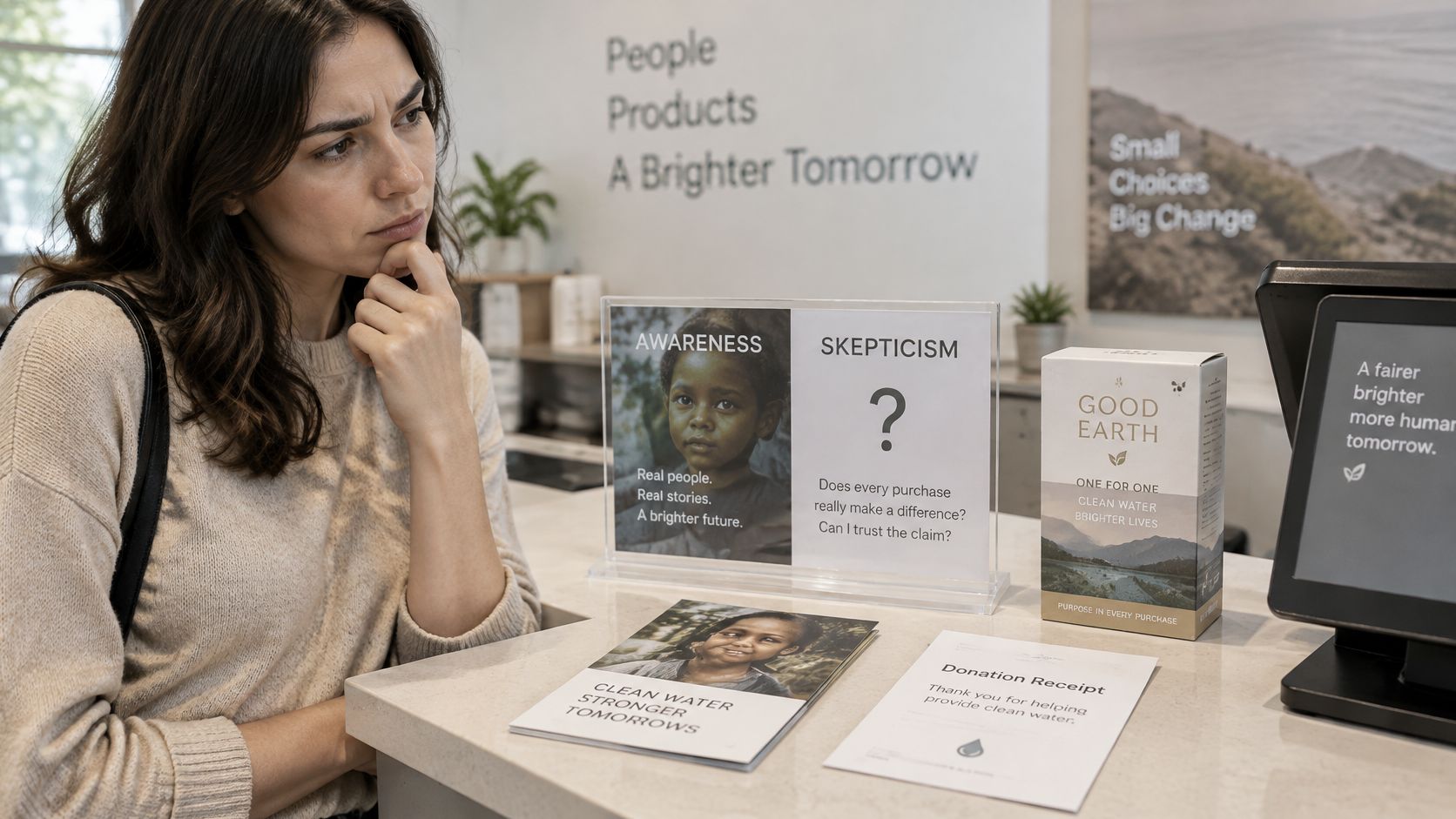
Awareness doesn't automatically produce trust. A cause-related marketing study of 500 consumers in India found that higher awareness was associated with higher skepticism toward cause-related marketing.
That finding doesn't mean you should communicate less. It means you should replace vague reassurance with evidence someone can inspect.
Publish evidence that answers specific questions
Create a giving-policy page with a clear reporting record, rather than relying entirely on campaign photography.
- Partner identity: Name the nonprofit or distribution organization and describe its role.
- Recipient eligibility: Explain who qualifies and who makes that decision.
- Geographic coverage: State where the program operates without implying universal availability.
- Fulfillment timing: Distinguish the purchase date, shipment date, and confirmed delivery.
- Independent checks: Describe how a partner or independent reviewer verifies completed donations.
- Limits and substitutions: Disclose caps, excluded purchases, replacement items, and whether this program replaces other corporate giving.
Define your reporting language carefully. Committed, shipped, and received describe different stages; combining them into a single giving total prevents readers from knowing what's finished.
Separate evidence from persuasion
A customer survey about whether people like your cause isn't proof that recipients benefited. Statlyst's guide to reading survey results critically is useful when reviewing who answered a survey, what they were asked, and how far its conclusions can reasonably extend.
Apply that discipline to your own reports. A partner's delivery confirmation supports a delivery claim. Evidence that recipients used an item supports a different claim. Neither justifies saying that a purchase solved a complex social problem.
Report delays, unsuitable goods, and disappointing outcomes alongside successes. You don't need to turn every product page into an audit, but shoppers should have a clear route from the sales promise to its terms and supporting evidence.
Credibility comes from a checkable record, not a stronger adjective beside the donation claim.
Decide Whether One-for-One Fits Your Brand
Make a go or no-go decision before writing the headline. An attractive campaign concept isn't enough to justify an ongoing fulfillment obligation.
| Go when | Pause or choose another model when |
|---|---|
| The product has a clear, practical use | Recipients need something different |
| The full matching cost fits your margin | Discounts or returns make the commitment unaffordable |
| A partner has agreed to deliver | Distribution responsibility remains unresolved |
| Your team can publish evidence | No one owns reconciliation or reporting |
Passing these checks makes an offer worth testing. It doesn't prove customers will prefer it to a cash-based alternative.
Run a controlled message test
Start this month by writing alternative headlines for the same product page. One should state the matching item, recipient group, and partner; the other should state a cash contribution with the same cost to your business, with both arrangements agreed before you accept orders.
Split traffic evenly for a fixed period and keep price, product photography, and the shopping journey consistent. Decide the duration and evaluation criteria before launch, and don't declare a winner from an early fluctuation.
Measure the results together:
- Conversion rate: Which offer leads more visitors to complete a purchase?
- Average order value: Does either message change what customers buy?
- Refund rate: Do purchasers later reverse their decision?
- Complaints: Are customers misunderstanding or challenging the promise?
A fake door test can help explore interest before committing to an offer, but it must not turn an unfulfilled donation promise into a reason to collect payment. Make the status clear before a customer purchases.
Keep the version that converts without worsening refunds or creating confusion, and only if you can substantiate its claim. If the results are inconclusive, continue testing rather than forcing a decision.
At Polish, we keep what converts: winning pages get more visitors, weaker ones are rewritten, and the process continues. For a giving campaign, that optimization still needs a firm boundary: every version must describe an obligation your business can fulfill.
Before the offer goes live, confirm the partner, delivery schedule, and reporting owner in writing.
Polish rewrites landing-page headlines, supporting copy, and calls to action, then serves stronger-performing versions to visitors. Visit Polish to test how clearly your giving offer communicates its value while keeping the donation terms accurate across every variation.
- one for one marketing
- cause marketing
- buy one give one
- social impact marketing
- purpose-driven brands
Your website rewrites itself until it converts.
Polish writes new versions of your headlines and CTAs, tests them on your real visitors and keeps the ones that win.
Start free