7 Benefits of a Landing Page for Better Conversions
Explore 7 benefits of a landing page, from higher conversions and sharper segmentation to better tracking, messaging, and marketing decisions.
Published on 14 min read
Table of contents
- 1. Increased Conversion Rate Optimization Through Personalization
- 2. Reduced Customer Acquisition Cost Through Smart Attribution
- 3. Accelerated Learning Loop and Continuous Improvement Velocity
- Build a feedback loop your team can trust
- 4. Data-Driven Decision Making and Predictive Insights
- Turn response data into decisions
- 5. Improved Brand Messaging Consistency and Clarity Across Touchpoints
- Adapt the wording while preserving the promise
- 6. Scaling Marketing Performance Without Proportional Cost Increases
- 7. Enhanced Customer Insights and Market Intelligence for Product Development
- Turn acquisition signals into product questions
- Landing Page Benefits: 7-Point Comparison
- Turn Landing-Page Benefits Into a Repeatable Growth Loop
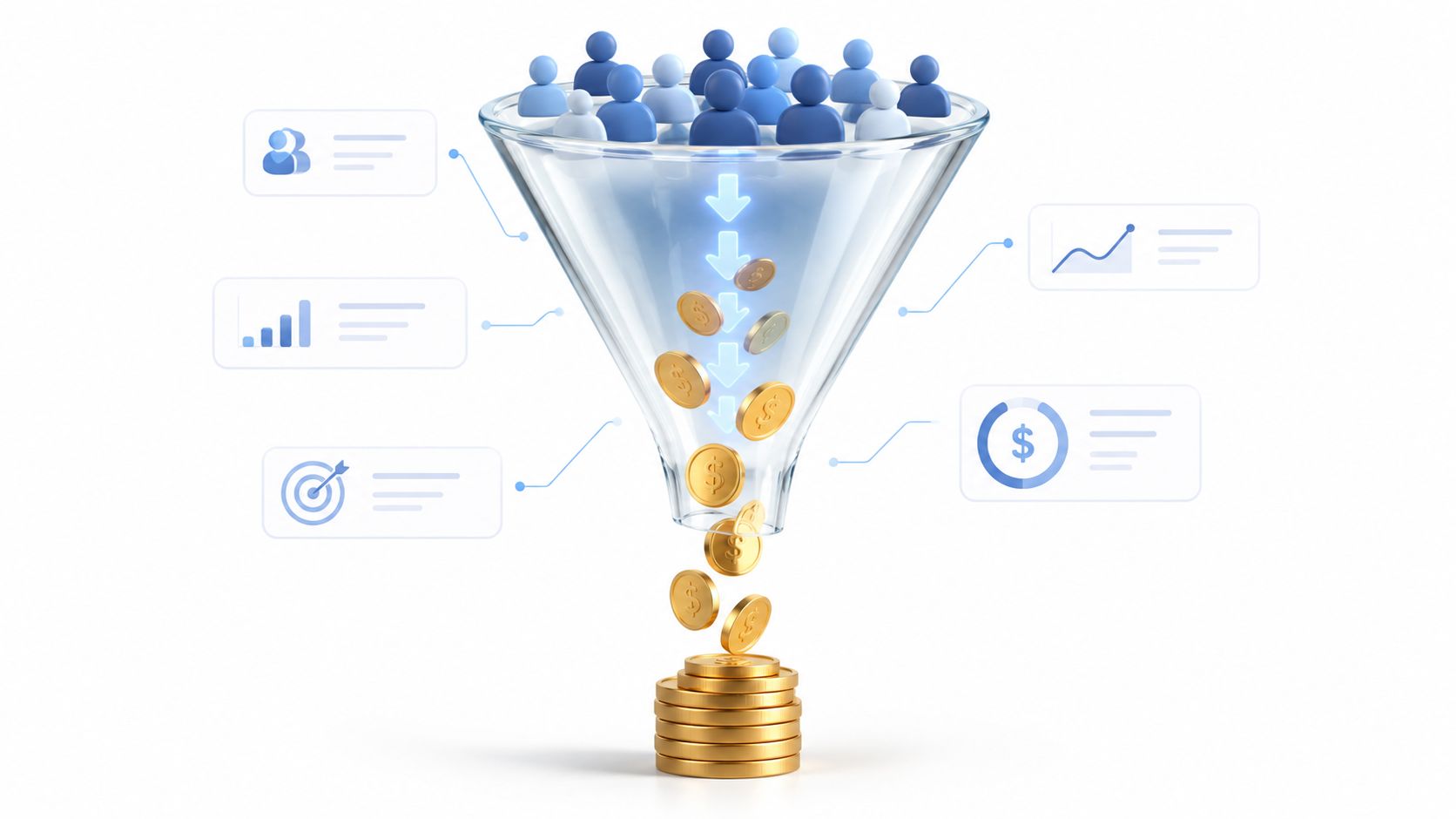
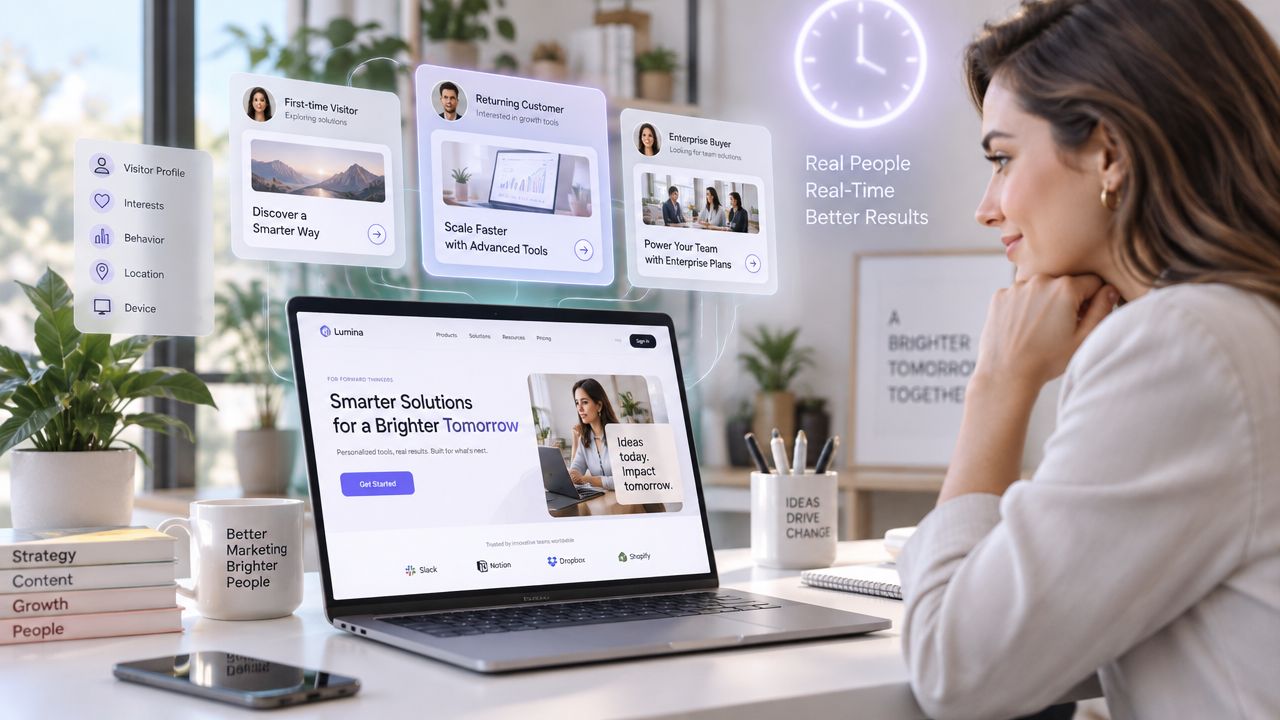
A paid ad click, an organic search visit, a mobile user, and a returning customer can all arrive on the same page, yet see the same headline, subheading, and CTA. That mismatch creates friction before the visitor has even evaluated the offer. A landing page gives each campaign a focused destination, but its larger value appears when the page responds to visitor context, including the source, campaign, device, country, and visit history.
The benefits of a landing page therefore extend beyond a cleaner design or a higher form completion rate. They form an operating system for acquisition: match intent, capture behavior, improve the message, scale what works, and feed customer insight back into marketing and product decisions. Polish is one relevant example. It can write and select landing-page variations for each visitor, using the signals available from the visit. Here are the seven benefits that make that system useful in practice.
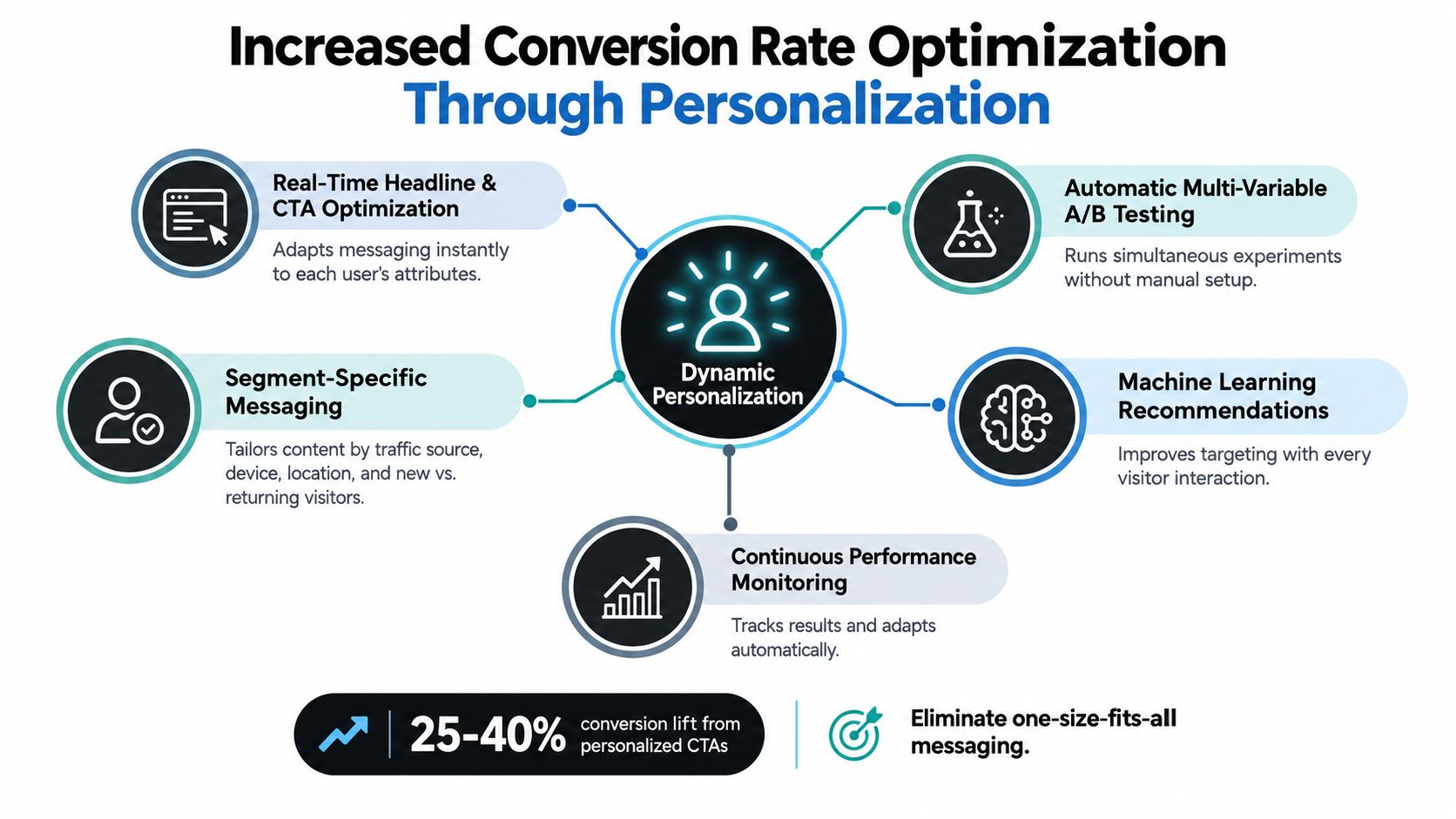
1. Increased Conversion Rate Optimization Through Personalization
Personalization makes a landing page answer the visitor's immediate question: “Am I in the right place?” A person arriving from a product-focused search ad should see a different emphasis from someone returning through an email campaign. The offer may be identical, but the proof, objection, and next step can change.
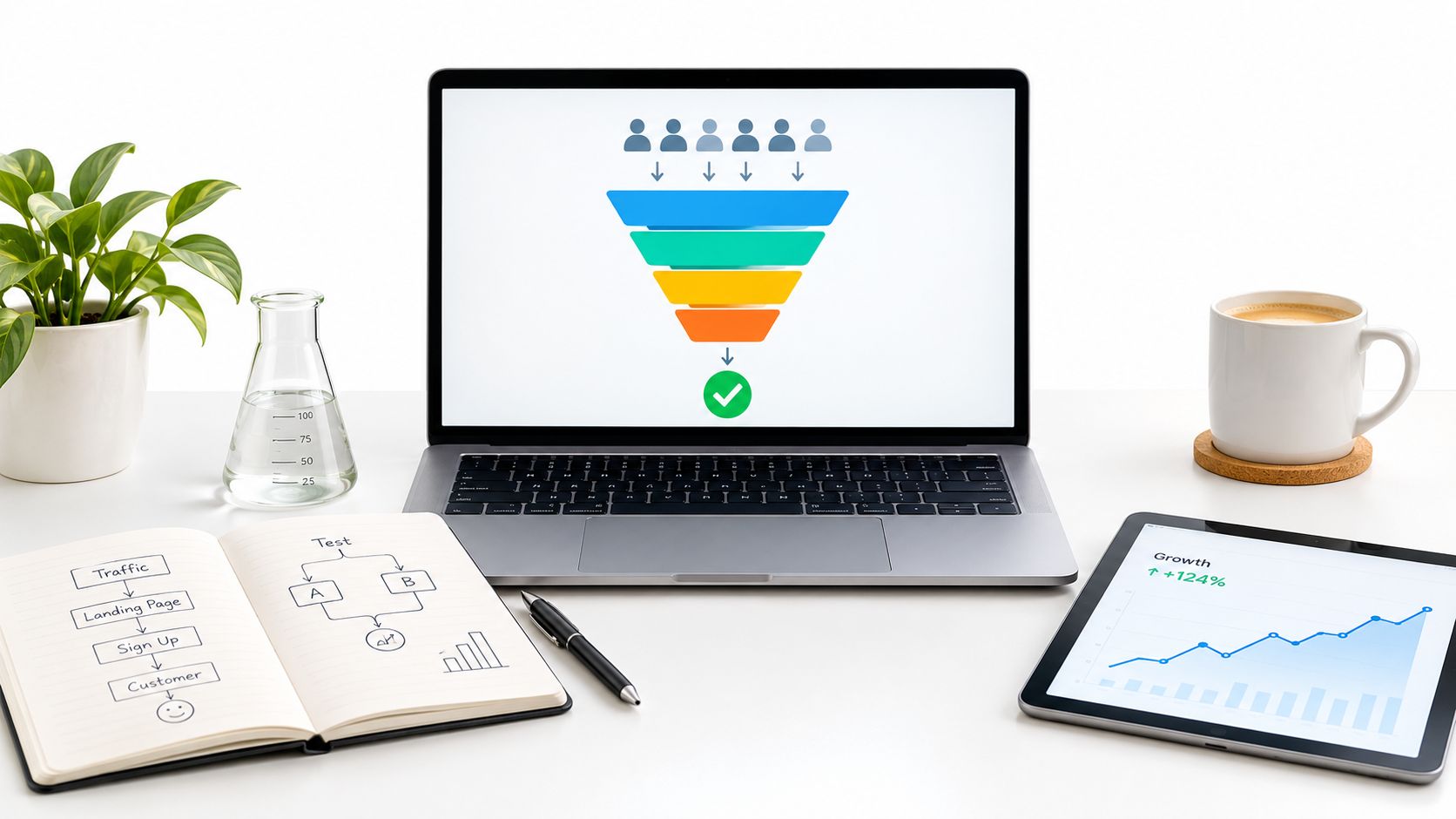
A dedicated page also gives CRO teams a controlled surface for testing. Instead of changing a broad website page with several navigation paths, they can isolate the headline, supporting copy, CTA, form, and offer around one conversion goal. The widely cited benchmark from HubSpot's landing page statistics places the median landing-page conversion rate at 6.6%, roughly 1 in 15 visitors. That isn't a promise for every campaign. It's a useful reference point for judging whether a focused experience deserves more testing.
Polish can generate variations around visitor context, while the team still defines the conversion event and the boundaries of the message. A practical starting sequence is:
- Choose one high-traffic page: More visits create a faster feedback loop, but don't begin with a page whose conversion goal is unclear.
- Define the business outcome: Separate a demo request, trial start, purchase, and qualified lead instead of treating every click as success.
- Review segments weekly: Compare source, campaign, device, country, and new versus returning visitors.
- Protect message accuracy: Personalization should sharpen relevance, not invent claims or show an offer the visitor can't receive.
Practical rule: Personalize the message only when you can explain why that visitor should see it.
For a deeper look at the mechanism, real-time landing-page personalization shows why headline and CTA relevance matter. The same principle applies to acquisition creative, including rendering ads with Veo3 AI: the ad creates an expectation, and the landing page must continue it.
2. Reduced Customer Acquisition Cost Through Smart Attribution
A search ad can promise a product comparison while the landing page opens with a broad company statement. The campaign pays for attention, then loses the visitor's context. A campaign-specific page preserves the promise, gives the visitor a clear next step, and makes the resulting conversion easier to evaluate.
Attribution becomes a working part of acquisition management. Tag campaigns consistently with UTM parameters, then connect each visit to its page variation, conversion event, and eventual lead or customer quality. Review individual campaigns rather than channel totals. “Paid search” is too broad to guide a headline change when separate campaigns target different problems, locations, or stages of demand.
Use the page and its reporting to answer allocation questions:
- Which campaign produces qualified conversions: A low-cost form completion may have little value if sales rejects the lead.
- Which message fits the source: Compare the ad promise with the headline, proof, and CTA that follow it.
- Which device creates friction: A form that works on desktop may be difficult to complete on a phone.
- Which audience needs a different proof point: New visitors may need clarity, while returning visitors may need a direct next step.
The landing-page statistics roundup from Webtonic lists reporting fields teams typically track, including clicks, impressions, CTR, mobile-friendly click rate, and AMP validity. These fields help separate an ad problem from a post-click problem. A weak CTR points toward creative or targeting. Strong click volume with poor conversions points toward message match, page experience, or offer friction.
Use the findings to adjust spend and campaign briefs, not just page copy. First establish clean attribution, then examine the highest-spend campaigns and connect conversion data to actual acquisition costs. A variation may increase form submissions while lowering lead quality, so judge CAC alongside downstream outcomes. The result is a defensible budget decision and a landing page that supports the wider acquisition system.
3. Accelerated Learning Loop and Continuous Improvement Velocity
Traditional testing often creates a queue. A copywriter proposes a headline, design implements it, analytics waits for enough traffic, and the team reviews the result later. That process can work, but it makes learning expensive when many campaigns, audiences, and devices need different messages.
An adaptive landing-page system changes the workflow. It can distribute variations, observe responses, and direct more traffic toward stronger options while continuing to learn. The important benefit isn't the novelty of automation. It's the shorter distance between visitor behavior and the next marketing decision.
Teams still need discipline. Define the primary conversion before launch, set a minimum quality threshold, and decide what counts as a meaningful result. A system that optimizes for button clicks alone may produce more clicks without producing better leads. Review performance by segment so an overall winner doesn't hide a poor experience for a valuable audience.
Build a feedback loop your team can trust
Start with a dashboard that shows the conversion event, traffic source, device, page variation, and downstream quality. Add qualitative evidence, such as sales objections, support questions, or session recordings where permitted. Then schedule a regular review that asks what the data changes in the next campaign brief.
Multi-armed bandit testing for landing pages is relevant when the team wants to balance exploration of new copy with delivery of known-performing variations. It shouldn't replace judgment. A misleading promise can win a short-term interaction and damage trust later.
The practical advantage is compounding knowledge. Each tested headline can inform an ad, an email subject line, a sales script, or a product page. Teams that document those lessons build an asset that remains useful after the original campaign ends.
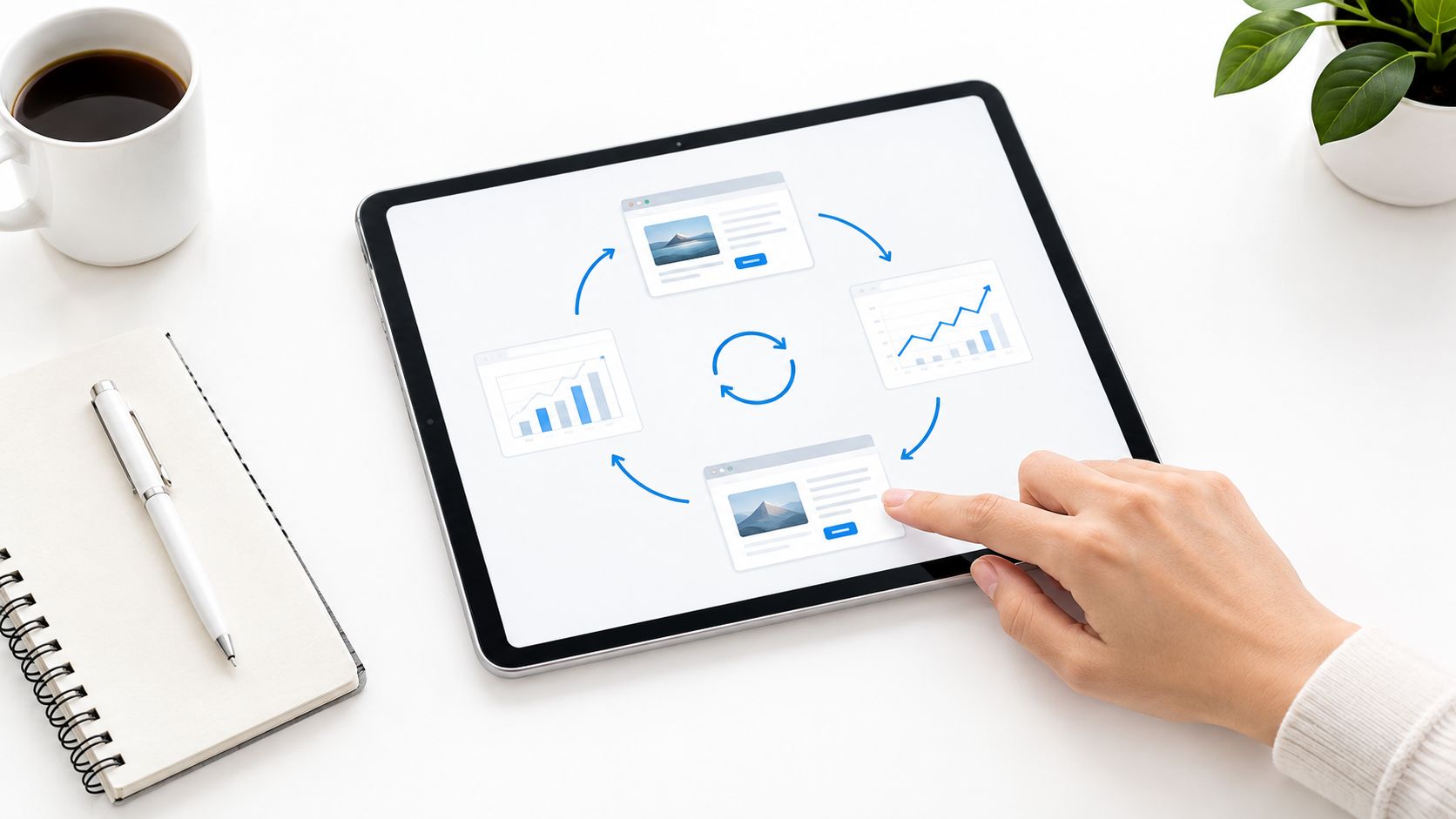
The optimization loop is easier to manage when the team can see what happens after publication, not just at the moment of launch.
4. Data-Driven Decision Making and Predictive Insights
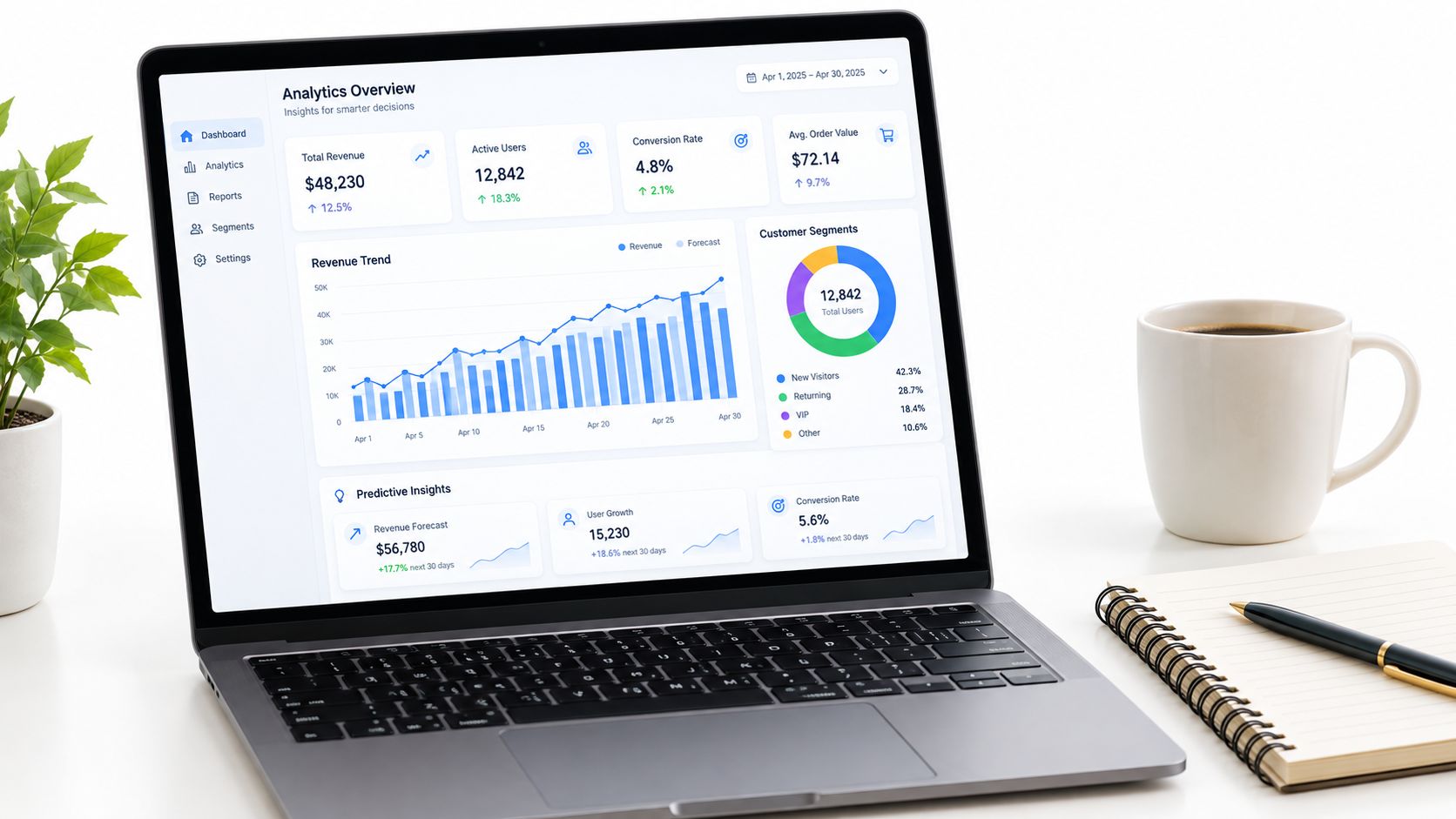
Landing-page behavior can reveal what visitors value before the wider organization has a clear answer. Compare two value propositions, then examine which audience responds to each one. The result isn't a complete customer profile, but it can challenge assumptions about priorities, objections, and buying language.
This makes a landing page useful to more than the CRO team. Marketing can use the winning message in campaigns. Sales can adapt discovery questions and follow-up language. Product leaders can investigate whether repeated demand for a benefit points to a missing capability, a packaging issue, or a positioning gap.
Turn response data into decisions
A useful reporting layer should show more than the overall conversion rate. Break results down by:
- Visitor context: Source, campaign, device, country, and visit history.
- Message element: Headline, subheading, CTA, proof, and offer.
- Conversion quality: Lead qualification, sales progression, purchase behavior, or retention signals where available.
- Confidence and limitations: Sample size, tracking gaps, privacy restrictions, and changes in traffic mix.
The Unbounce Conversion Benchmark Report provides a broad reference point based on 41,000 landing pages, 464 million pageviews, and 57 million conversion actions. Those figures describe the scale of that benchmark, not a forecast for your business. Your own data remains more useful when the page, audience, offer, and conversion definition are comparable.
Predictive insight also requires restraint. A message that performs well for one segment doesn't automatically describe the whole market. Treat it as a signal to validate through customer interviews, sales conversations, product research, and controlled campaign tests. The landing page becomes a decision instrument when teams combine its behavioral evidence with those other inputs.
5. Improved Brand Messaging Consistency and Clarity Across Touchpoints
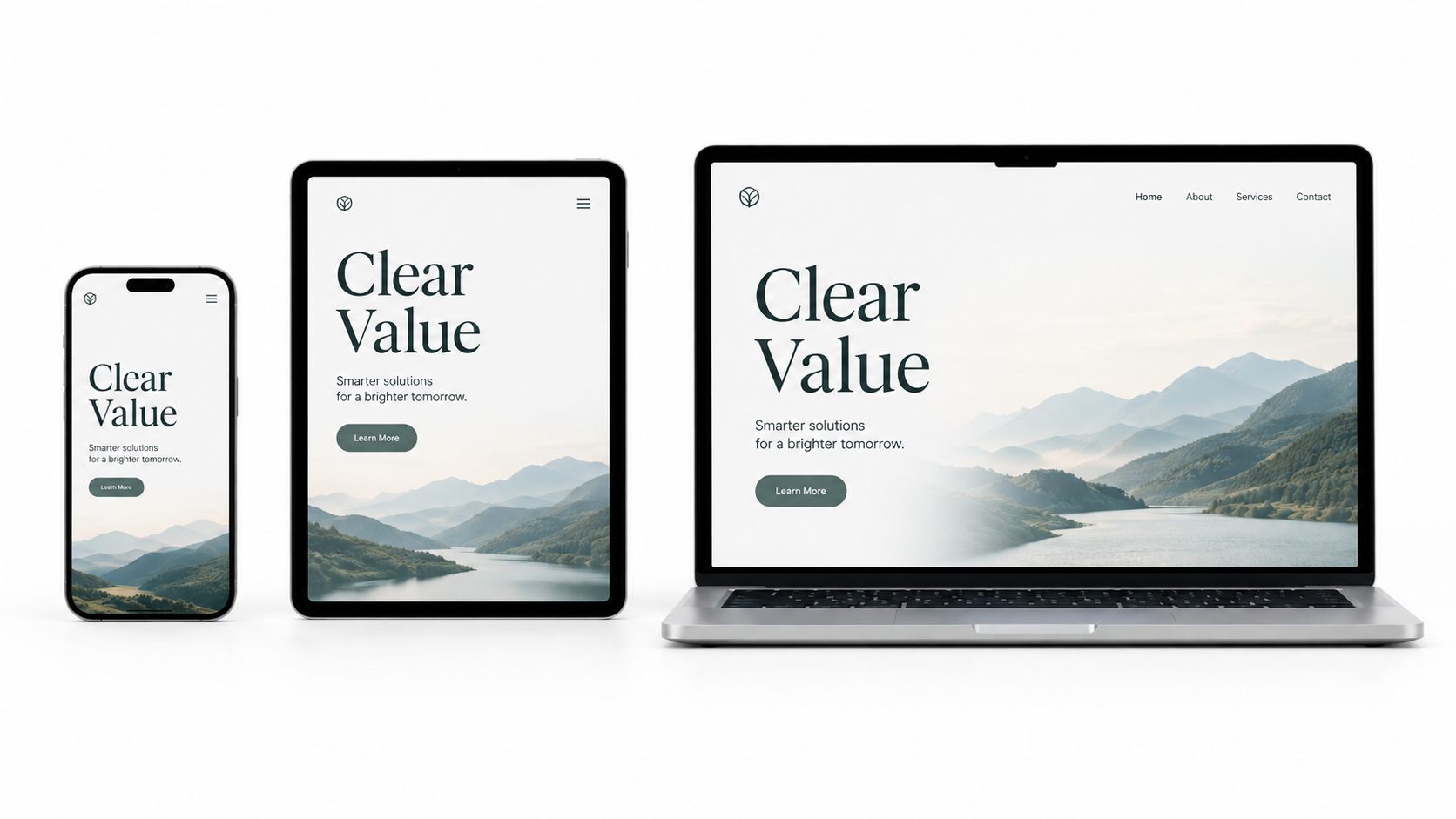
A paid search visitor arrives with a specific query, while an email subscriber may already understand the problem. The landing page must meet both expectations without forcing either audience to decode the offer. Its role in the acquisition operating system is to connect campaign language to a clear promise, then give every downstream touchpoint a reliable message to build on.
Use the page to test how customers understand the offer in context. A product page might lead with the customer's problem, explain the expected outcome in its subheading, and place technical features in the proof section. That hierarchy can guide the next ad brief, nurture email, sales deck, and website rewrite. It also exposes a trade-off: adding every benefit may increase coverage, but it can weaken the primary message.
Adapt the wording while preserving the promise
Consistency requires the same audience, outcome, and substantiated proof across channels. The format should still change. A paid ad needs concise relevance, an email can supply context, and a landing page must connect the message to one specific action.
Record approved language in a shared message library:
- Core promise: The result the customer seeks.
- Audience language: The words customers use for the problem.
- Proof points: Evidence the team can support.
- CTA vocabulary: The next step in plain language.
- Avoided claims: Statements that create legal, operational, or expectation risk.
A guide to writing a clear value proposition can help teams define that foundation. Keep the page focused. Visitors should not have to choose which benefit matters most, because the marketing team should make that priority clear.
Before launch, compare the page with the ad, email, and sales follow-up. Confirm that the promised outcome, audience description, and CTA remain aligned. If the page promises one result while sales explains another, the workflow creates confusion at the handoff. Review the message library after campaigns and customer conversations, then update the page and related assets together.
6. Scaling Marketing Performance Without Proportional Cost Increases
More traffic exposes every weakness in a funnel. A vague offer, slow form, or headline that conflicts with the ad can turn additional spend into additional waste. A systematic landing-page program lets the team expand campaigns while checking whether the message still fits each source and audience segment.
Scaling also has a capacity limit. Sales coverage, inventory, onboarding, fulfillment, and customer support determine whether extra conversions produce growth or overload. Set that limit before raising spend, then track unit economics and lead quality as volume changes.
Start with a page that has a defined conversion event and a message supported by early results. Expand in controlled steps across related campaigns, countries, devices, or audience groups. Keep a change log, since a performance shift may result from traffic mix, creative, offer, tracking, or the page itself.
Use the page as an operating layer for acquisition:
- Adapt the message: Preserve the promise and conversion logic, but adjust wording for the new audience rather than copying the page.
- Protect attribution: Carry campaign and source parameters through the conversion path.
- Check lead quality: Confirm that added volume meets the same qualification or revenue standard.
- Match delivery capacity: Verify that the organization can serve the customers the campaign attracts.
- Review customer value: Compare acquisition cost with the value of the resulting customer, not only the initial conversion.
A landing page can support expansion into new channels or markets because each destination gives the team a controlled place to test relevance. It does not confirm that pricing, trust signals, compliance requirements, or the offer fit that market. Validate localization before committing a larger budget.
For teams building supporting infrastructure, backend as a service use cases can provide ideas for connecting lead capture and routing with the wider marketing stack. Scaling the page requires scaling the data flow and follow-up process as well. Recheck both after every meaningful increase in volume.
7. Enhanced Customer Insights and Market Intelligence for Product Development
A landing page can serve as a low-cost research instrument before a product team commits development resources. By presenting a proposed outcome, feature, audience, or positioning, the page reveals which problems attract attention and which promises generate action. That signal supports product discovery, while leaving room to verify whether customers would use the finished product.
Consider a SaaS team weighing two roadmap themes. One page emphasizes customization; another highlights ready-made workflows. If a defined audience responds more strongly to the first message, product and research teams gain a specific question to investigate. Do visitors need deeper configuration, different templates, or clearer control within the current product?
Turn acquisition signals into product questions
Set up a monthly review involving growth, product, sales, and customer success. Compare segment-level message performance with sales conversations, support requests, and customer feedback. Record the decision that follows, the next test, and whether later product usage supports the original assumption.
Use landing-page evidence to:
- Test future positioning: Present a clearly labeled concept or waitlist offer before building the complete experience.
- Prioritize objections: Review unanswered questions near conversion drop-off and in form responses.
- Refine personas: Combine visitors' language with their source context when updating audience definitions.
- Inform onboarding: Carry the promise that attracted a customer into the first product experience.
- Check message-to-usage fit: Compare the benefit promised on the page with the feature customers use.
A conversion is evidence of interest in an offer, not proof that the product decision is correct.
Privacy and accuracy set boundaries for this workflow. Do not infer sensitive characteristics that visitors have not provided, and do not treat a segment label as a complete explanation of intent. Landing-page evidence works best when it gives product leaders sharper research questions. It should support interviews, usability work, and usage analysis rather than replace them.
The operating loop is direct: acquisition tests a promise, behavior identifies interest, and product teams investigate the underlying need. Marketing learns which outcomes earn attention. Product learns which outcomes customers seek strongly enough to explore. Roadmap discussions then rely on shared evidence, while each experiment remains a signal to validate rather than a commitment to build.
Landing Page Benefits: 7-Point Comparison
| Benefit | 🔄 Implementation Complexity | ⚡ Resource & Efficiency | 📊 Expected Outcomes | 💡 Ideal Use Cases | ⭐ Key Advantages |
|---|---|---|---|---|---|
| Increased Conversion Rate Optimization Through Personalization | Medium–High: AI integration, segmentation setup, initial tuning | Moderate–High traffic and ML platform; analytics integration required | 25–40% conversion lift possible; lower CPA; compounding gains | High-traffic landing pages, e‑commerce product pages, SaaS trials | Real-time personalization, automated multivariate testing, continuous learning |
| Reduced Customer Acquisition Cost (CAC) Through Smart Attribution | Medium: attribution system integration and strict tagging | Requires cross-channel analytics, UTM discipline, moderate data volume | Significant CAC reductions (examples: 28–42%); better budget allocation | Performance marketing, multi-channel paid campaigns, ROI-focused teams | Channel-specific optimization, data-driven budget reallocation, cost visibility |
| Accelerated Learning Loop and Continuous Improvement Velocity | Medium: deploy automated testing and bandit algorithms; cultural change | Continuous traffic, automation tools, monitoring dashboards | Experiment cycles cut from weeks to days; many more tests; faster wins | Growth teams, rapid-iteration environments, competitive markets | Rapid optimization velocity, reduced time-to-decision, scalable testing |
| Data-Driven Decision Making and Predictive Insights | Medium: BI/predictive model integration and governance | Data engineers/analysts, reporting tools, privacy/compliance processes | Actionable insights for strategy; predictive performance forecasts | Product strategy, executive reporting, data-driven enterprises | Evidence-based decisions, predictive insights, informs positioning & budgets |
| Improved Brand Messaging Consistency and Clarity Across Touchpoints | Low–Medium: testing framework plus cross-team alignment | Messaging governance, documentation, moderate testing traffic | Clearer brand messaging, higher recall, shorter sales cycles | Rebranding efforts, omnichannel campaigns, sales enablement initiatives | Validated messaging, increased recall, consistent cross-channel application |
| Seamless Scaling of Marketing Performance Without Proportional Cost Increases | Medium–High: need baseline data and scalable infrastructure | High baseline conversions, scalable platforms, monitoring systems | Scale ad spend with maintained/improved CAC; fewer diminishing returns | Startups scaling budgets, market expansion, multi-channel scaling | Maintains performance at scale, reduces scaling risk, reproducible campaigns |
| Enhanced Customer Insights and Market Intelligence for Product Development | Medium: cross-functional workflows and shared data practices | Analytics, product collaboration, segment-level testing traffic | Validated feature priorities; reduced product risk; faster time-to-market | Product-led companies, roadmap prioritization, market discovery tests | Direct feedback to product, identifies whitespace, informs pricing & features |
Turn Landing-Page Benefits Into a Repeatable Growth Loop
The most valuable landing page isn't a one-off campaign asset. It's a repeatable operating layer between acquisition and the rest of the business. It carries the promise from the ad or search result into a focused experience, records what the visitor responds to, and turns that response into a better message, campaign, or product question.
Start with one conversion goal. Decide whether the page should generate a qualified inquiry, start a trial, sell a product, or move an existing prospect to the next stage. Give the page one primary action, then make the headline, subheading, proof, form, and CTA support that action. A broad homepage may still have a role, but it shouldn't be the default destination for every campaign.
Next, connect each campaign to a dedicated page and tag traffic consistently. Preserve source, campaign, device, country, and visit-history signals where your privacy practices and consent model allow it. Define reports that show both conversion volume and conversion quality. Without clean attribution, personalization creates more variations but not more understanding.
Review message performance before increasing spend. A landing page can help identify which promise fits a campaign, but it can't compensate for weak targeting, a poor offer, or an operational bottleneck. Test the highest-value uncertainty first, such as whether the audience responds to an outcome, a pain point, a proof point, or a specific CTA. Keep the winning language accurate across the ad, page, sales follow-up, and product experience.
The combined benefit is stronger than any individual tactic. Focused messaging improves relevance. Attribution shows where performance comes from. Adaptive testing speeds learning. Reusable customer insight informs future campaigns and product decisions. Together, they turn acquisition from a series of disconnected launches into a feedback system.
Teams that want to automate headline, subheading, and CTA variations can evaluate Polish. Whatever tool you use, protect data quality, privacy, and message accuracy as the program expands. Start with a controlled page, a measurable goal, and a review process your team can follow every week. For creative inspiration, a swipe-file library for ads can help generate test ideas, but your own audience data should decide what stays.
Polish offers an autonomous approach to landing-page personalization, writing headline, subheading, and CTA variations and selecting an appropriate version for each visitor. If you want to connect visitor context with measurable conversion testing, visit Polish and evaluate it against one focused campaign.
- benefits of a landing page
- landing page optimization
- conversion rate optimization
- personalized marketing
- marketing analytics
Your website rewrites itself until it converts.
Polish writes new versions of your headlines and CTAs, tests them on your real visitors and keeps the ones that win.
Start free